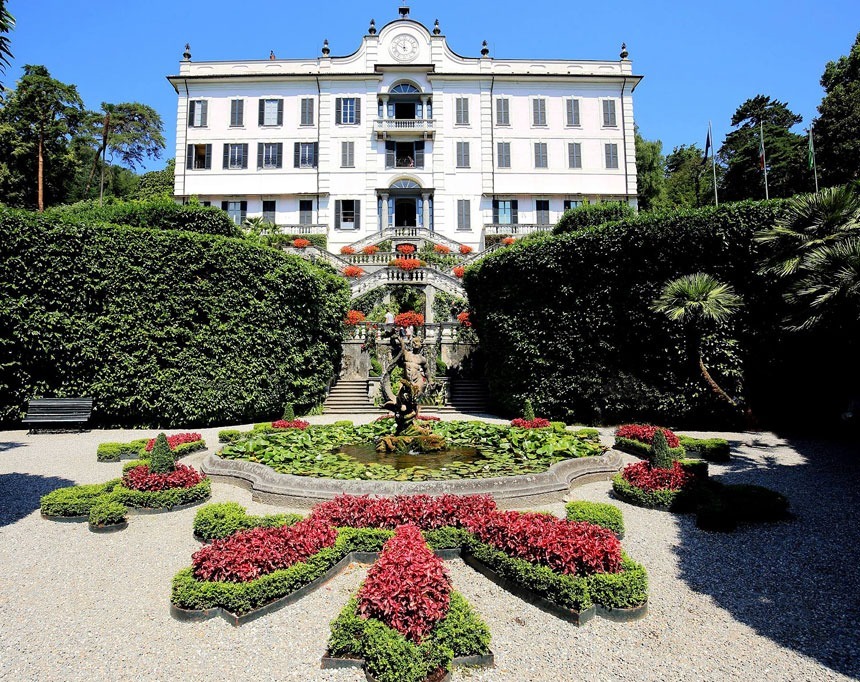
Villa Carlotta on Lake Como – History, Art and Botanical Garden
Villa Carlotta stands in the municipality of Tremezzina, directly on the shores of Lake Como. Today, it ranks among the most prestigious historic villas on the lake, internationally renowned for its art collections and extraordinary botanical garden.
Moreover, Villa Carlotta belongs to the prestigious network of the Great Italian Gardens, where art, architecture and nature blend into a unique cultural experience.
History of Villa Carlotta
Originally known as Villa Clerici, Marquis Giorgio II Clerici commissioned the villa around 1690. He wanted to celebrate the origins of Como and the success of his family.
In 1801, Gian Battista Sommariva purchased the property. At the time, he served as President of the Government Committee of the Cisalpine Republic. In addition, Sommariva was a passionate art collector with close connections to the most important artists of his era.
As a result, he transformed the villa into a cultural landmark. He redesigned the interiors to host his growing art collection, which soon made the villa famous throughout Europe. Writers and artists such as Stendhal, Flaubert and Lady Morgan visited Villa Carlotta during this period.
Art Collections
Today, Villa Carlotta houses masterpieces of exceptional artistic value. In particular, the collection includes sculptures by Antonio Canova and his school, as well as important works by Thorvaldsen, such as Palamedes, Cupid and Psyche and Terpsichore.
Furthermore, Sommariva collected contemporary paintings. Among them was Una Nevicata by Francesco Fidanza, now displayed at the Gallery of Modern Art in Milan.
The villa also once hosted Francesco Hayez’s celebrated painting The Last Kiss of Romeo and Juliet, a manifesto of Italian Romanticism.
From Royal Residence to Public Heritage
In 1843, Princess Marianne of Nassau acquired the villa. A few years later, she gifted it to her daughter Carlotta of Prussia, whose name the villa still bears.
After Carlotta’s premature death, the property passed to the Saxony-Meiningen family. Over time, they preserved the building and enriched its decorative elements without altering its original structure.
However, the most significant contribution of the German family concerned the garden. Duke George II and his son Bernard III, both passionate botanists, actively developed and expanded the park.
Architecture
Villa Carlotta represents a refined example of Baroque architecture on Lake Como. Although monumental in scale, the building remains sober and elegant.
The villa is arranged over three floors, two of which are open to the public. The lower level displays the main art collections. The upper floor, instead, reflects the original residential function through refined galleries and living spaces.
Thanks to its privileged position, the villa enjoys spectacular views over the Bellagio peninsula and the surrounding mountains.
The Botanical Garden of Villa Carlotta
The botanical garden stands among the most celebrated on Lake Como. It extends over terraced grounds and hosts more than 500 plant species, favoured by the lake’s mild climate.
Today, visitors can admire:
-
Citrus pergolas
-
Ancient camellia hedges
-
Over 150 varieties of azaleas and rhododendrons
-
Tropical and exotic plants
-
Fern valleys, palm trees, bamboo gardens
-
Monumental trees such as cedars, sequoias and plane trees
In addition, the historic greenhouse once used for citrus cultivation now hosts a museum of traditional agricultural tools.
Villa Carlotta Today
Today, Villa Carlotta stands as one of the most important cultural, historical and botanical landmarks on Lake Como. It attracts visitors from all over the world and represents an essential reference point for anyone interested in the heritage and lifestyle of the lake.